
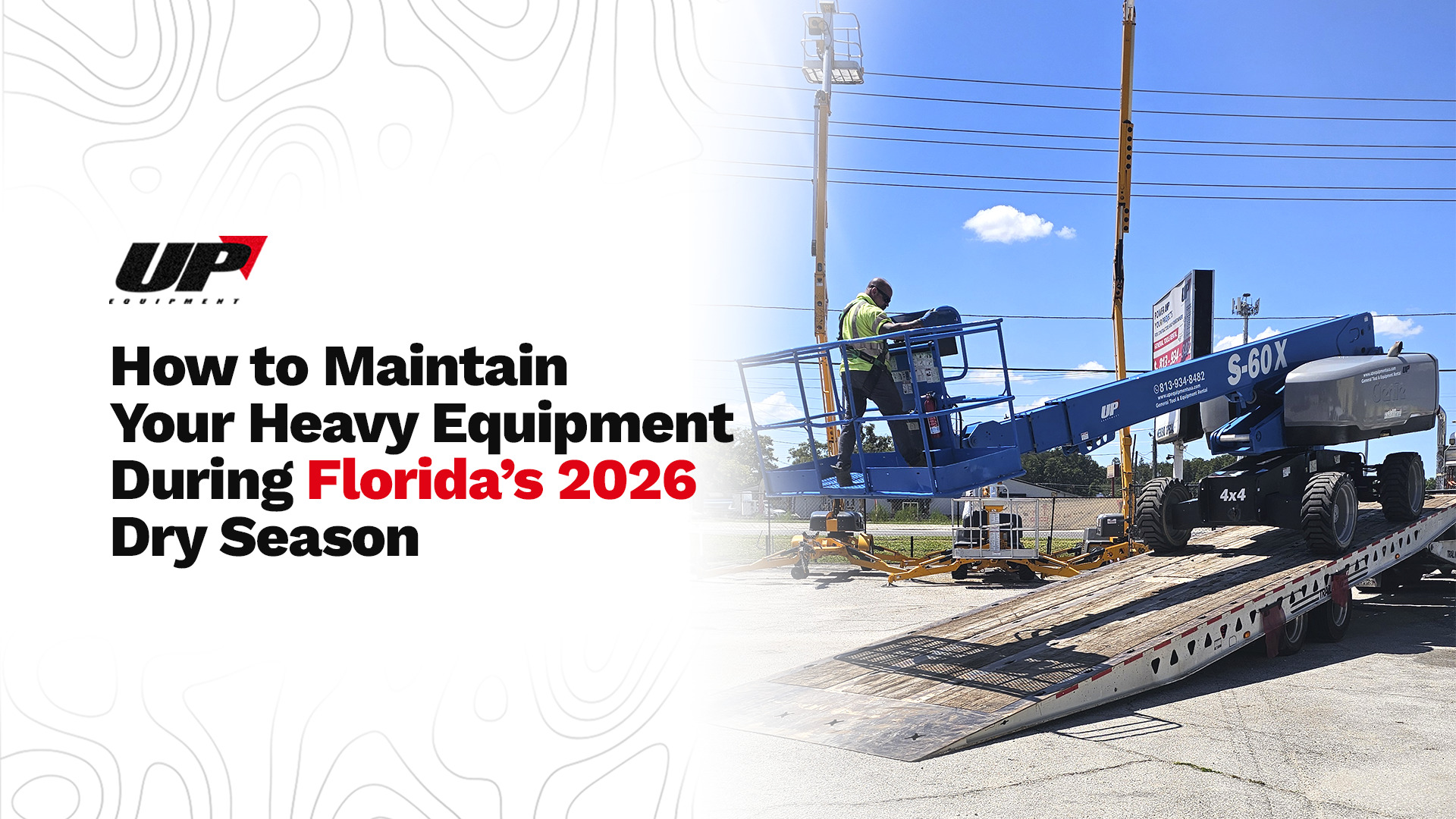
Florida’s 2026 dry season is shaping up to be longer, warmer, and—above all—dustier. For contractors and independent operators, this stretch of clear skies is the perfect window to accelerate schedules, tackle delayed projects, and keep machinery in motion. But dry weather also brings new challenges: dust buildup, overheating risks, and accelerated wear.
The key to staying productive is simple: keep your equipment moving by keeping it maintained.
Why the Dry Season Demands Extra Attention
Unlike Florida’s rainy months—where mud, water, and corrosion are the primary threats—the dry season introduces different stressors:
- Dust infiltration in engines, vents, and hydraulics
- Higher operating temperatures
- Increased friction on moving parts
- Faster tire and track wear
- Operators working longer hours under sun and heat
Step 1 — Start With a Daily Dust-Control Routine
Dust is the number-one enemy during Florida’s dry season. Even small amounts can clog filters, contaminate hydraulic systems, and reduce efficiency.
Daily must-habits:
- Blow out air filters at the start and end of each shift
- Inspect radiator fins and clear debris
- Clean the cab interior to prevent electronics contamination
- Wipe down exposed cylinders and joints
Pro tip: If a machine works in a high-dust zone (roads, demo sites, landscape clearing), increase filter checks to twice per shift.
Step 2 — Monitor Cooling Systems Closely
Higher temperatures plus longer workdays mean engines run hotter. Overheating is a common—and completely avoidable—cause of equipment failure.
Check:
- Coolant level and coolant quality
- Radiator condition
- Fan belt tension
- Thermostat performance
If your machine shows fluctuating temperatures, schedule a professional inspection before continuing heavy use.
Step 3 — Lubricate Often, Not Just on Schedule
Dry air accelerates friction on all moving parts. Even machines up to date on service intervals may need extra lubrication during the season.
Key areas to lubricate:
- Pivot points
- Lift arms
- Bucket joints
- Tracks and rollers
- Boom extensions
- Steering components
Rule of thumb: If a machine is working extended hours, lubricate at least 30% more frequently.
Step 4 — Protect Hydraulic Systems
Dust + heat = hydraulic system stress.
Perform weekly checks:
- Inspect hoses for cracking
- Look for leaks or wet spots around fittings
- Test lift responsiveness
- Check hydraulic fluid color and level
Cloudy or dark fluid means contamination—flush and replace immediately to avoid long-term damage.
Step 5— Protect Your Battery From Heat Stress
Florida’s dry season temperature spikes can kill weak batteries fast.
Check:
- Battery terminals for corrosion
- Mounting brackets for vibration wear
- Voltage health under load
If a battery is more than two years old, test it weekly.
H2: Step 6 — Use Rentals Strategically to Reduce Wear
One of the smartest ways to avoid overworking your fleet is renting supplemental equipment. During the dry season—when long-hour days are common—rentals help you:
- Reduce strain on your primary machines
- Access specialized equipment only when needed
- Prevent downtime during repairs
- Scale quickly when new jobs come in
Adding one or two key rentals can prevent breakdowns and keep every timeline moving.
Final Thoughts — Keep It Moving Through the Dry Season
Florida’s dry season gives contractors a valuable opportunity to push forward, complete major work, and operate without weather interruptions. But productivity only lasts if the equipment does.
With the right maintenance routine—plus smart use of rentals when needed—your machines stay cool, clean, and dependable all season long.
Keep It Moving. Your projects, your momentum, your 2026.